
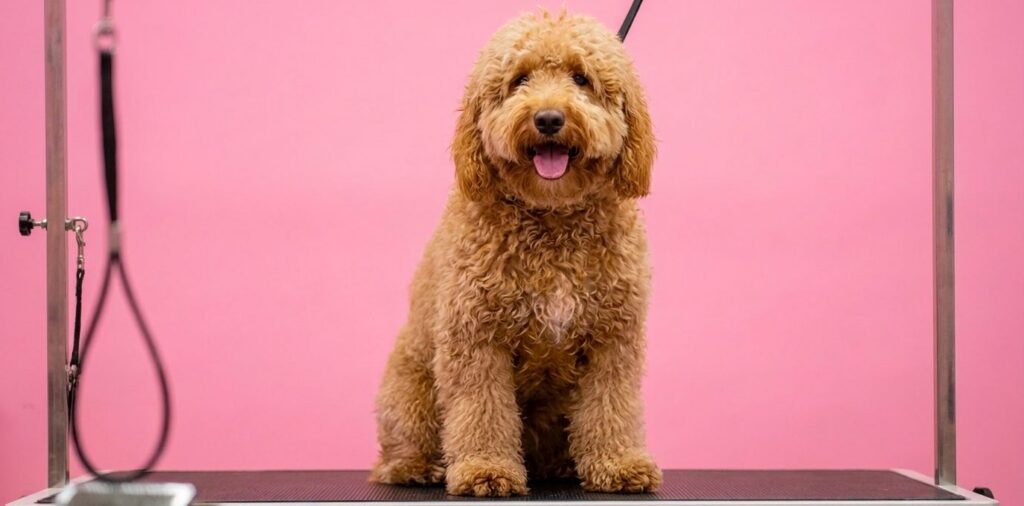
Why Your Dog Hates Grooming and How to Fix It
If your dog turns into a wiggling, whining, or shutting-down mess the moment the brush comes out, you’re not alone—and neither is your dog. Grooming isn’t a “problem” your dog has. For a lot of dogs, it’s a genuinely uncomfortable, overwhelming experience, and once we understand why, we can actually fix it.
At Walks and Wags, we believe grooming should never be something dogs have to endure. It should be something they learn to trust. Here’s what’s really going on when your dog hates grooming and how a calmer, more relationship-based approach can turn things around
Common Reasons Dogs Dislike or Fear Grooming
Unfamiliar Sounds
Clippers buzzing, dryers roaring, nail grinders whirring—these sounds are loud, sudden, and totally foreign to a dog’s world. Without positive exposure early on, these noises can trigger a genuine fear response, not just mild annoyance.
Handling Sensitivity
Grooming requires a lot of touching in places dogs aren’t always used to being touched—paws, ears, tails, faces, bellies. Some dogs are naturally more sensitive to touch in these areas, and without gradual desensitization, that sensitivity can turn into real distress.
Previous Negative Experiences
If a past grooming session was rushed, forceful, or painful (think: a nail trimmed too short, or matted fur pulled through too quickly), your dog remembers. Dogs are excellent at forming associations, and one bad experience can color every appointment after it.
Matting
Mats aren’t just a cosmetic issue they pull on the skin, restrict movement, and can be genuinely painful to remove. A dog with matted fur isn’t being “dramatic” during grooming; they may actually be hurting.
Anxiety
Some dogs carry general anxiety that grooming simply intensifies. New environments, being restrained (even gently), and unfamiliar people handling their body can all add up to a dog who’s overwhelmed before the groomer even picks up a brush.
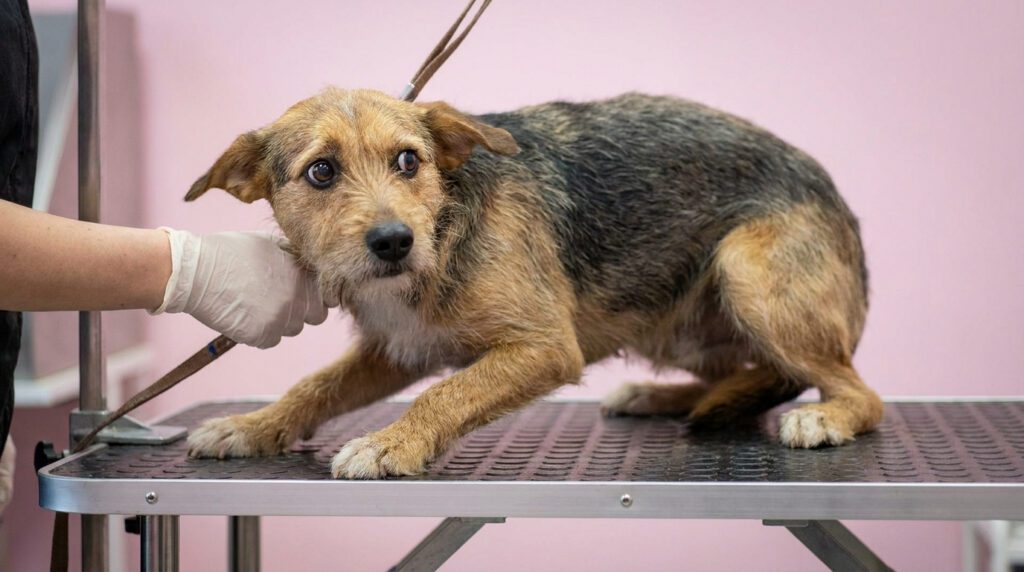
Why Forcing a Fearful Dog Through Grooming Backfires
It can be tempting to just “push through” a grooming session when a dog is resisting—it feels faster, and it gets the job done for today. But forcing a fearful dog through grooming almost always makes the next appointment harder, not easier.
Here’s why: fear-based experiences get stored deeply. If a dog learns that grooming means being restrained until they stop struggling, they don’t learn to tolerate grooming—they learn that grooming is something to dread and resist even harder next time. Over time, this can escalate into full-blown grooming aversion, where even seeing the grooming table triggers panic.
The goal isn’t to get through today’s appointment. It’s to build a dog who feels safe walking in for their fiftieth appointment, too.
A Better Way: Positive Handling and Gradual Introductions
The dogs who do best with grooming are the ones who’ve been taught, patiently and gradually, that grooming is safe. This looks like:
- Short, positive sessions first. Instead of diving into a full groom, early sessions focus on simply getting comfortable being touched, standing on the table, and hearing the clippers from a distance.
- Reading the dog’s body language. A skilled groomer knows the difference between a dog who’s mildly unsure and a dog who’s genuinely panicking, and adjusts the pace accordingly.
- Pairing new experiences with rewards. Treats, praise, and breaks help a dog build positive associations instead of just tolerating the process.
- Never forcing past a dog’s limit. If a dog needs to stop and regroup, that’s not a failure; it’s how trust gets built.
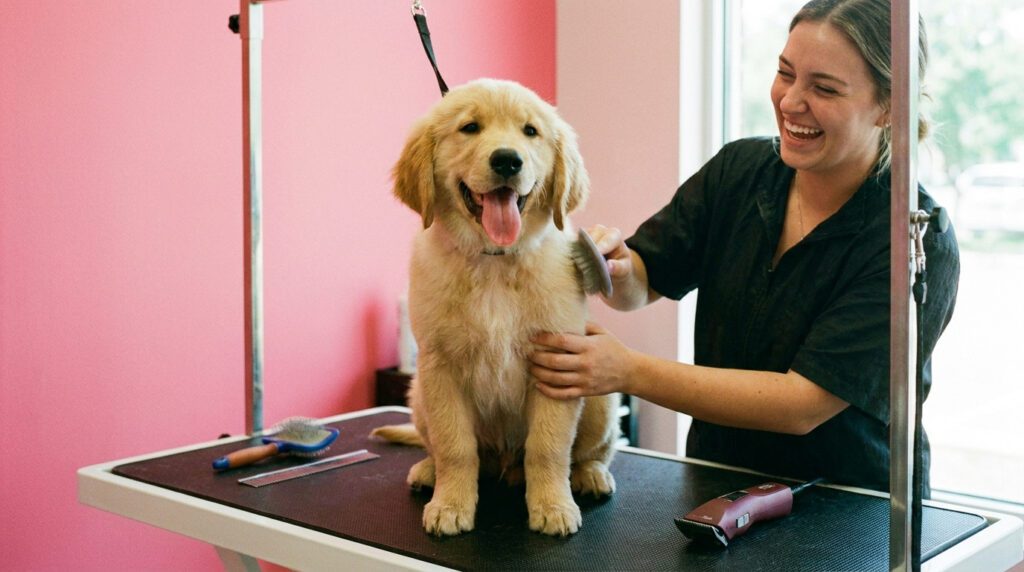
Why Early Puppy Grooming Experiences Matter
Puppyhood is the best window to shape how a dog will feel about grooming for the rest of their life. Early, low-pressure exposure to brushing, nail handling, and gentle bathing done before a puppy has any reason to be afraid can prevent grooming anxiety from ever developing in the first place.
A puppy who learns early that having their paws touched or their ears cleaned is no big deal is far more likely to grow into an adult dog who handles grooming with ease. This is one of the biggest reasons we treat puppy grooming as its own careful, confidence-building process rather than a smaller version of adult grooming.
What You Can Do at Home Between Appointments
You don’t have to wait for grooming day to start building your dog’s comfort. A few minutes a few times a week can make a real difference:
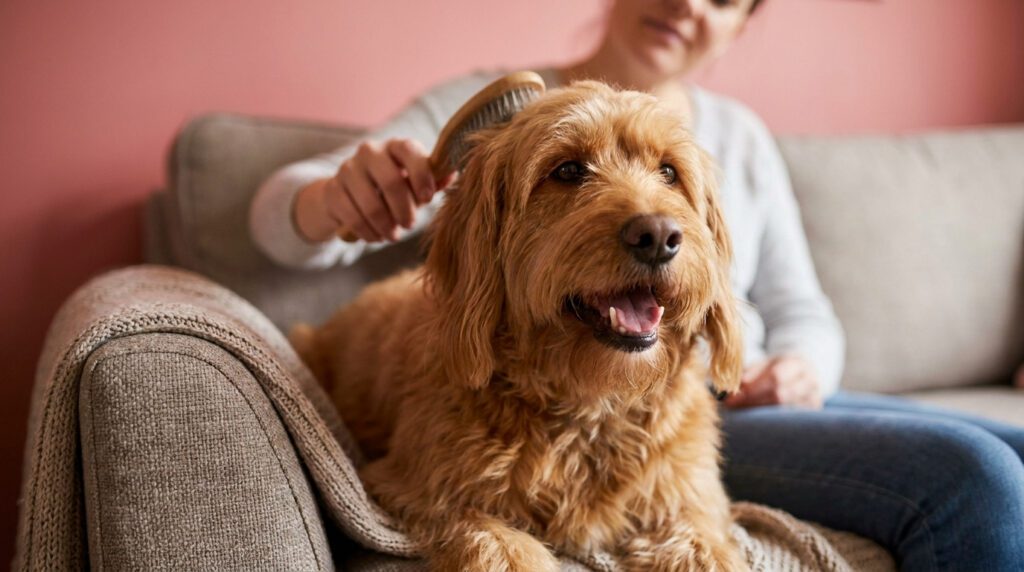
- Handle their paws regularly. Gently touch and hold each paw for a few seconds, rewarding calm behavior. This alone can make nail trims dramatically easier.
- Introduce brushing casually. Keep a brush around and use it in short, relaxed sessions—not just before an appointment.
- Touch ears, mouth, and tail gently. Get your dog used to being handled in the areas groomers need to access.
- Reward calm behavior. Pair all of this with treats and praise so your dog associates handling with good things, not just grooming day.
- Keep sessions short. A minute or two of positive handling is more effective than a long session that ends in frustration for either of you.
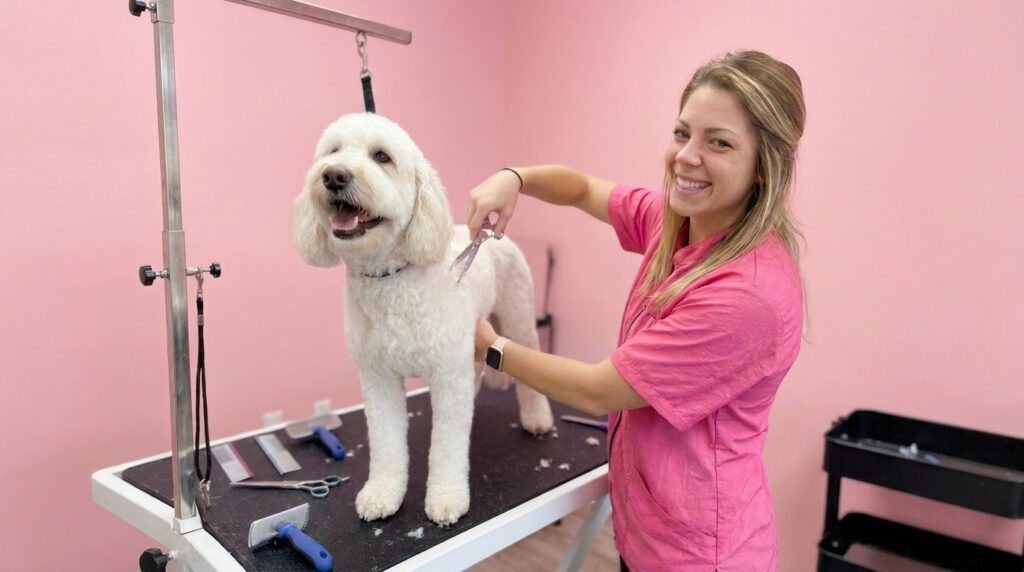
Consistency and a Trusted Groomer Make All the Difference
Dogs feel safest when things are predictable. A consistent routine—paired with a groomer who takes the time to understand your dog’s specific triggers and comfort level—helps dogs relax more with every visit. Over time, dogs who once dreaded grooming can become dogs who walk in calmly, because they’ve learned, through repeated positive experience, that grooming isn’t something being done to them. It’s something being done with them.