Is Dog Daycare Good for Dogs? Benefits, Risks, and Who Thrives
The short answer
Yes, dog daycare can be very good for dogs, but only for the right dog, in the right group, with the right care. For a social, confident pup, a well-run daycare offers exercise, mental work, friendships, and a steady routine that is hard to match at home alone. For a dog who is anxious overwhelmed, or simply prefers people to other dogs, the same day can feel stressful instead of fun.
In other words, daycare is not automatically good or bad. It depends on your dog and on how the daycare is run.
After more than 20 years of caring for dogs here in Mobile, that is the truth we keep coming back to. Below, we’ll walk you through the real benefits, the honest risks, and the signs that tell you whether your dog will thrive in group daycare or would be happier with a different kind of care.
Familiar vs. unfamiliar: how every dog sees a new place
For every dog, the world falls into two categories: familiar and unfamiliar. Every person, place, and thing fits into one or the other, whether it’s a stranger, a city bus, or a brand-new toy. When something is unfamiliar, there is a natural sense of uncertainty, because nothing about it is predictable yet.
A first day at daycare is no different. Some dogs hit a home run on day one. Others spend that first day a little unsure, then go home and decide, “Hey, that wasn’t so bad.” On their second visit, they once again set the pace, not us. In our experience, most dogs settle in somewhere between day one and day three.
That’s why we hold firmly to one principle: slower acclimation is faster than rushing. Letting each dog move at their own pace isn’t just kind. It’s essential.
The benefits of dog daycare (for dogs who enjoy it)
When a dog genuinely likes the daycare environment, the benefits show up both during the day and back at home.
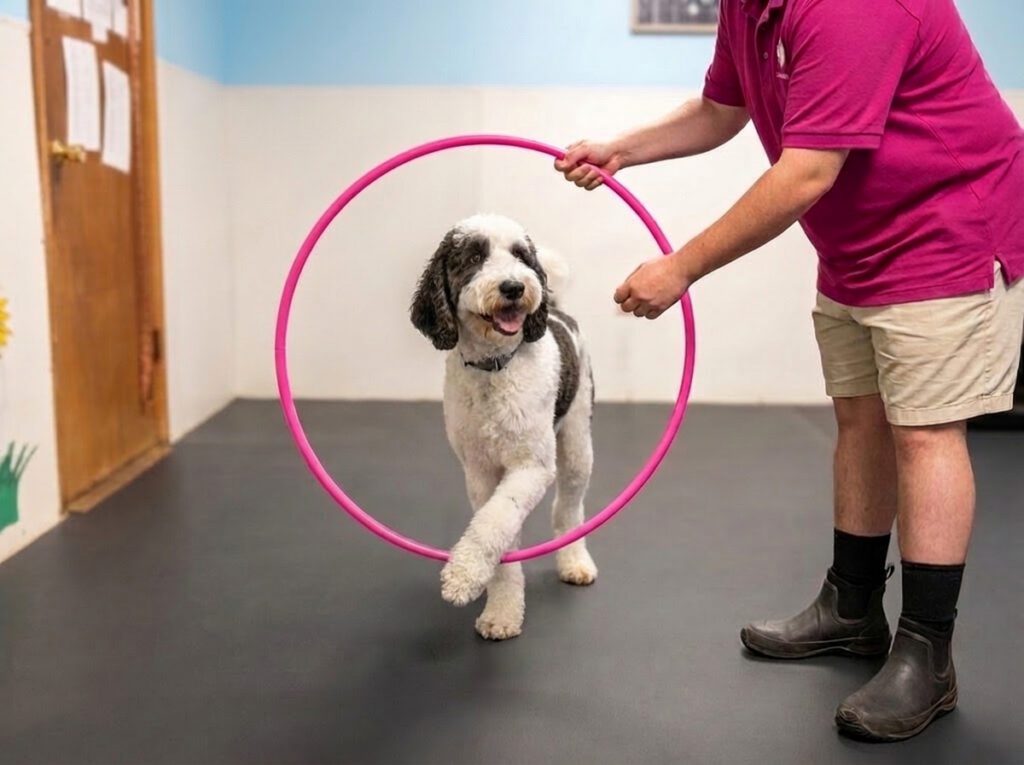
- Physical activity. Dogs need more movement than a quick walk before work can give them. Supervised play, yard time, and even swimming help burn energy in a healthy way, which often means fewer chewed shoes and calmer evenings.
- Mental stimulation. A tired body is only half the picture. Puzzle games, training games, new equipment, and real-world exposure (umbrellas opening, strollers rolling by) give your dog’s brain a workout too.
- Social interaction. For dogs who enjoy other dogs, playing with well-matched friends builds social skills like taking turns, reading body language, and knowing when to take a break.
- Routine. Dogs feel safer when their days are predictable. A consistent schedule, consistent caregivers, and a consistent group of classmates help many dogs relax and settle in.
- Enrichment. Good daycare is more than a room full of dogs. It is a planned day with play, learning, rest, and new experiences that build confidence over time.
This is why we call our program enrichment daycare. The goal isn’t just to keep dogs busy. It is to send them home more confident, better mannered, and happily tired.
Why daycare isn’t automatically right for every dog
Here is something you won’t hear from every daycare: some dogs are happier without group play, and that’s okay.
Dogs are individuals, just like people. Some of us love a big party. Others would rather have coffee with one close friend. A dog who is pushed into a busy group before they are ready can become stressed, fearful, or reactive. Over time, a poor fit can make behavior worse instead of better.
Daycare can also be the wrong fit when it is run the wrong way. Large groups of mismatched dogs, too little supervision, and no built-in rest can overwhelm even a friendly, outgoing pup.
That’s why the right question isn’t just “Is daycare good for dogs?” It’s “Is this daycare good for my dog?”
What affects whether your dog will enjoy daycare
Six things shape how a dog experiences a day in group care.
Factor
Temperament
Age
Energy Level
Play Style
Confidence
Social Preferences
What it means for daycare
Easygoing, curious dogs usually adjust quickly. Dogs who are fearful, guarded, or easily startled may need a slower start or a different setting.
Puppies need short play bursts, lots of naps, and a protected group. Seniors often prefer a calmer pace, gentle company, and comfortable rest spots.
High-energy dogs often love having a daily outlet. Low-energy dogs can still enjoy daycare, but they need a group that won’t pester them.
Some dogs wrestle, some chase, and some just like to sniff and explore. Dogs do best with friends who play the same way.
Confident dogs handle new places and new friends well. Shy dogs can grow in confidence in a small, gentle group, but they shouldn’t be rushed.
Some dogs love other dogs. Some love people more. Some prefer one or two best friends over a crowd. All of these are normal.
None of these factors make a dog “good” or “bad.” They simply tell us what kind of day will help that dog feel safe and happy.
What makes daycare safe and enriching
Even the most social dog needs a well-run program. Four things separate a great daycare from a
stressful one.
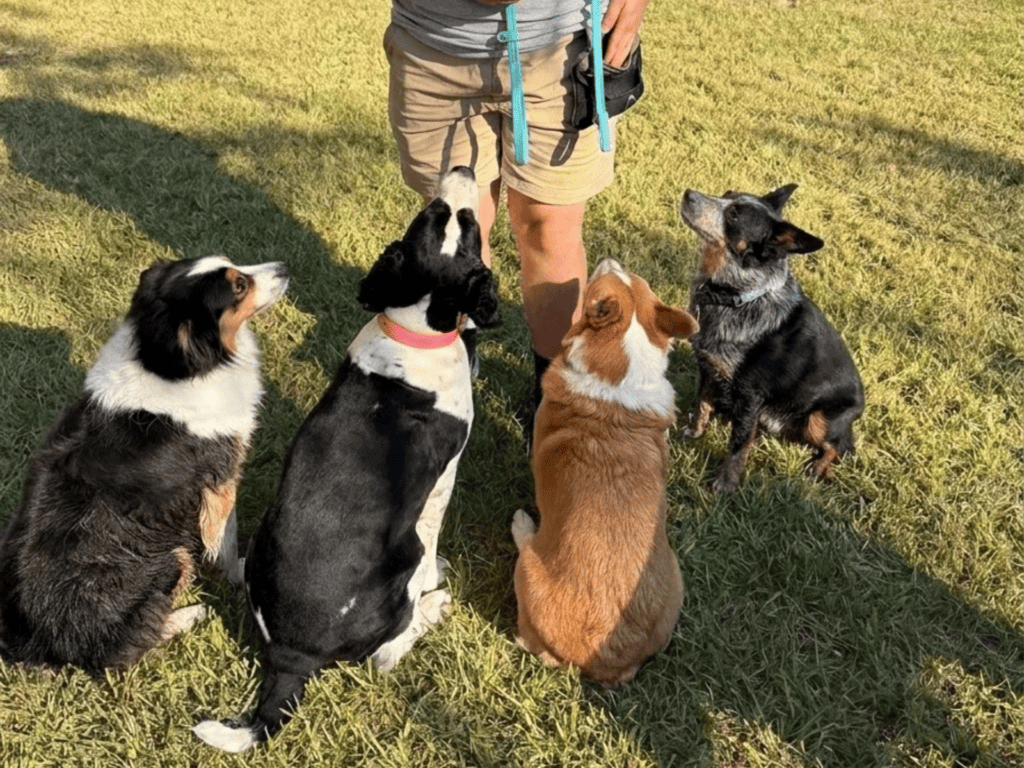
- Appropriate playgroups. Dogs should be grouped by size, age, temperament, and play style, not just tossed into one big room. At Walks and Wags, dogs stay in small, stable groups with the same classmates each semester, so friendships stay predictable and play
stays safe. - Active supervision. Watching is not the same as supervising. Trained staff should read body language, step in early when play gets too rough, and give a dog a break before stress builds. Our team is PACCC-certified and trained in dog language and group play.
- Built-in rest. Nonstop play is not a good thing. Dogs need quiet time to settle down, just like toddlers need naps. A good day mixes play, learning, and real downtime.
- Individual pacing. Every dog’s day should fit that dog. Shy pups build confidence in gentle small groups. Seniors enjoy companionship at their own speed. High-energy dogs get supervised outlets to burn it off.
When you tour any daycare, ask how they handle each of these four things. The answers will tell you a lot.
Signs your dog is thriving in daycare (and signs they may need something else)
Your dog can’t tell you in words how their day went, but their behavior can.
Signs your dog is thriving
- Gets excited in the car or at the door on daycare days
- Walks in with a loose, wiggly body and a relaxed tail
- Plays with others, then takes breaks on their own
- Comes home tired but relaxed, and settles well
- Eats, drinks, and sleeps normally at home
- Report cards show steady social wins and new skills
Signs another type of care may fit better
- Hides, freezes, or pulls away at drop-off, even after several visits
- Tucked tail, pinned ears, lip licking, or yawning when arriving
- Stays glued to the fence, a corner, or a staff member all day
- Comes home wired, clingy, jumpy, or unable to settle
- Loses appetite, has upset tummies, or sleeps poorly after daycare
- Growling, snapping, or new reactivity starts showing up
If your dog falls more on the right side, it doesn’t mean something is wrong with them. They may simply do better with other options, such as a smaller or calmer group, private training, a solo swim session, or boarding with more one-on-one time.
Happy tired vs. stressed tired: how to tell the difference
Many pet parents say, “My dog sleeps all night after daycare. That means it’s working, right?” Often, yes. But not every kind of tired is a good kind.
Healthy tiredness looks like a dog who is relaxed and content. They may drink some water, eat dinner, stretch out, and sleep deeply. The next morning, they wake up refreshed and happy to see you.
Stress or overstimulation looks different. The dog may seem exhausted but can’t settle. Watch for:
- Pacing, panting, or restlessness long after they get home
- Being extra clingy, jumpy, or easily startled
- Excessive thirst, an upset stomach, or skipping meals
- Being snappy or irritable with family or other pets
- Sleeping for an unusually long time and seeming “flat” the next day
A quick way to remember it: happy tired settles down; stressed tired stays wound up. If you see stress signs more than once, talk with your daycare team. A good team will want to know and will help adjust your dog’s group, schedule, or pace.
How our New Dog Evaluation helps answer the question
The best way to know if group daycare is right for your dog is to let your dog show us. That’s exactly what our New Dog Evaluation Day is for.
- A quiet Monday start. We keep Monday groups small on purpose. Your dog spends the day with us, moving at their own pace, so we can build trust naturally. We never force a dog into a situation that causes stress or fear.
- A midday check-in. At lunchtime, one of our head trainers will update you on how your dog is doing. If your dog shows distress or fear, we’ll arrange an early pickup. All dogs must show non-aggressive behavior toward both dogs and people to join group daycare.
- A gentle finish and an honest report. If your dog is comfortable, they’ll get a soothing bath and nail trim before going home. You’ll also receive a report card with transparent honesty about what we saw.
The evaluation is $60 and includes the assessment, enrichment activities, your report card, and grooming when appropriate.
Most importantly, the evaluation isn’t a pass-or-fail test. It is how we get to know your dog. If group daycare is a great match, we’ll place your pup in the right small group. If it isn’t, we’ll be honest with you and recommend the kind of care that will truly help your dog feel safe and happy.
Frequently asked questions
Your dog can’t tell you in words how their day went, but their behavior can.
How many days a week should my dog go to daycare? It depends on your dog’s age, energy, and how they handle the day. Some dogs do great with two or three days a week. Others need more rest days in between. Your daycare team can help you find the right rhythm.
Can senior dogs go to daycare? Yes, many seniors love it. They simply need a calmer group, gentler activities, and more rest. Low-impact swimming can also be a wonderful option for older joints.
Is daycare good for puppies? It can be, as long as puppies are kept in a protected group with age-appropriate play and lots of naps. At Walks and Wags, puppies 8 to 16 weeks old attend Puppy Academy in their own “puppy bubble” until they’re ready for regular enrichment daycare.
My dog is shy. Should I skip daycare? Not necessarily. Many shy dogs grow in confidence in a small, gentle group with patient staff. The key is going slowly and watching your dog’s signals, which is exactly what the New Dog Evaluation is designed to do.
Can unaltered dogs attend daycare? At Walks and Wags, yes. We welcome unaltered dogs and adjust their care plan and groups accordingly.
Since 2005, Mobile families have trusted us to look at the whole dog: their body, their mind, and their heart. Call us at (251) 643-1615, email info@walksandwags.com, or stop by 631 Azalea Road. We’d love to meet your pup.